Product
HPMC for construction
The ALC-H series, eight published grades from 400 to 250,000 mPa·s, each with batch data and a TDS.

Application
On site
Read the columns left to right before touching the formulation: the substrate and the water account for more failures than the additive does.
| Issue on site | What to check | Additive direction |
|---|---|---|
| Tiles slide down the wall after fixing | Water ratio, notch depth and coverage, substrate absorption, and whether a notched trowel was used at all | Starch ether for thixotropy first, then the HPMC level. A higher-viscosity ether on its own thickens the mix without stopping slip |
| Open time too short — the tile will not wet out | Time to EN 1346 at the temperature and humidity the site actually has, not the laboratory; wind and direct sun on the scaffold; substrate suction | HPMC level or a step up in viscosity. Starch ether keeps the mix workable but does not replace water retention |
| Tiles lift, or sound hollow weeks later | Dust and laitance on the substrate, whether the adhesive was skimmed over before tiling, and the RDP and cement content | RDP at 15 kg/t for C1 and 25 kg/t for C2. Never fix adhesion by adding cement — a richer mix is more brittle and less tolerant |
| The mix stiffens in the bucket after a few minutes | Water ratio, filler grading and fines content, ambient temperature, and HPMC viscosity against the shear of the mixer | More water retention, or one step down in viscosity so the mix stays workable at the same dosage |
| Map cracking in thin bed and over flexible substrates | The deformability class the job requires (S1 to EN 12002), cement content, drying speed, and substrate movement | RDP up — 4.0–5.0% for C2TES1 — and cement down. Curing control matters as much as the additive |
| White bloom along the grout lines | Salt content of the sand and the mixing water, free water in the mix, and curing by flooding | No additive removes salt from sand. Cut the free water, cure without flooding, and check the sand source before changing the formulation |
Work down the middle column before the right one. Changing two things at once is how a formulation trial turns into a rumour.
Mechanism
Four components, four jobs. None of them substitutes for another, which is why swapping one for more of another rarely fixes a mix.
The substrate pulls water out of the fresh mortar within minutes. The ether holds that water long enough for the cement to hydrate and for the polymer to film, which is what separates a mix that cures from one that dries out on the wall.
Redispersible powder films across the cement matrix and the tile back. That film is what still holds after water immersion and after the wall has moved, and it is why C2 and C2TES1 carry polymer while C0 does not.
The mix gels at rest and flows under the trowel. A large tile stays where it is placed without extra water, which is the difference between a T class adhesive and one that has to be propped.
It accelerates hydration so that open time and early strength stay predictable when the site is cold, the substrate is damp, or the tiles have to be grouted the next day.
The part that is not on the label
Most site failures are not caused by a weak additive. They come from a formulation that was never matched to the substrate and the climate: the same C2 mix behaves differently on a 0.5% absorption porcelain slab and on a 15% absorption block.
Starting formulations
Taken from the formulation sheet we work from in production, and published here in full — including the levels we would normally keep to ourselves.
Binder and aggregate are batched to 1,000 kg; the additives are weighed on top of that.
| Component | C0 | C1 | C2 |
|---|---|---|---|
| Cement P.O 42.5 | 350 | 350 | 350 |
| Sand, 40–80 mesh | 300 | 350 | 350 |
| Sand, 80–120 mesh | 350 | 300 | 300 |
| HPMC — ALC-H500C | 2.8 | 2.8 | 3.5 |
| RDP | — | 15 | 25 |
| Calcium formate | 4 | 3 | 3 |
HPMC sits at 0.28–0.35% of the batch. C0 carries no polymer in this formulation; C1 and C2 are separated mainly by RDP level and by a slightly higher ether dosage in C2. This table was originally drawn up against the grade codes used by another supplier: the ether named here is the grade we would put into the formulation, not a conversion from those codes. We publish no such conversion, because the viscosity behind another supplier code is not something we can verify. Run a trial batch on your own sand grading and filler before production — open time and slip resistance are sensitive to the sand type. Where the sand is on the fine side and open time is not the constraint, C0 can also be run on ALC-H100C as a leaner choice; that is a separate decision, not an equivalence.
Percentages are of the dry mix, so the table scales to any batch size.
| Component | C1TE | C2TES1 |
|---|---|---|
| Cement | 35 | 30–35 |
| Sand, 40–120 mesh | 65 | 60–65 |
| RDP | 1.0–1.5 | 4.0–5.0 |
| HPMC — ALC-H500C | 0.3–0.4 | 0.3–0.4 |
| Starch ether | 0.03–0.10 | 0.03–0.10 |
| Calcium formate | 0.3–0.5 | 0.5–0.8 |
The letters in the class tell you what was added: T for reduced slip, E for extended open time, S1 for deformability. C2TES1 is the same cement system as C1TE with far more polymer — that difference, not the ether, is what buys the S1 classification.
These are starting points, not specifications
These are starting formulations, not specifications. Cement source, sand grading, filler absorption, mixing water and site climate all move the result. Run a trial batch with the materials you actually buy, and adjust the cellulose ether and the polymer level before production.
Grades
One ether grade covers all five formulations on this page. The classes are separated by polymer level and by ether dosage, not by the grade — and because the formulations were written against another supplier code, choosing ours is a formulation decision, not a conversion.
| Grade | Viscosity | Role in this application | Typical dosage |
|---|---|---|---|
| ALC-H500C | 50,000 mPa·s | The grade in all five formulations here: C0, C1, C2, C1TE and C2TES1 | 2.8–3.5 kg/t (0.28–0.35%); 0.3–0.4% in the percentage formulations |
| ALC-H100C | 10,000 mPa·s | Leaner option for C0 where the sand is fine and open time is not the constraint | 2.8 kg/t (0.28%) |
| ALC-H200 | 20,000 mPa·s | Lower-viscosity option for dense C2 mixes with a high RDP load, where wet-out is the problem | 0.3–0.4% — confirm on a trial batch |
Grade codes come from the nominal viscosity: ALC-H500C is the 50,000 mPa·s tile-adhesive grade and ALC-H100C the 10,000 mPa·s one. Batch viscosity is released within −10% / +20% of nominal, measured by the method and under the conditions stated on the COA. Dosages are starting points on a 1,000 kg batch.
Diagnosis
One column for what you see, one for what usually causes it, and one for the single parameter to change first.
| Symptom | Most likely causes | Adjust this first |
|---|---|---|
| Tiles slide after fixing | Too much water; ether level too low or the wrong grade; very absorbent substrate; notch deeper than the tile needs | Water ratio, then starch ether, then the ether level — one change at a time, or you learn nothing |
| Hollow sound when the floor is tapped at 28 days | Dust or laitance left on the substrate; adhesive skimmed over before tiling; RDP or cement below the class level | A pull-off test on site. If the break is at the interface, it is substrate preparation, not the formulation |
| Mix unusable in the bucket while the first row is still going down | Low water retention against a dry substrate; high-viscosity ether at a low dosage; hot, windy weather | Ether dosage or grade, keeping the water ratio unchanged so the comparison means something |
| Cracks along the joints and map cracking across the field | Cement-rich mix; no polymer; rapid drying; substrate movement beyond the class the adhesive is rated for | RDP up and cement down. If the substrate moves, the class has to change — dosage will not cover it |
| White bloom on the grout lines | Salt in the sand or the water; free water in the mix; curing by flooding; a damp substrate | Sand and water source, then the water ratio, then the curing method |
Diagnose in the order the columns are written. A symptom that appears after two weeks is a different fault from one that appears overnight.
Acceptance
What to measure, the method that makes the number comparable, and the shortcut that makes a failing batch look like a passing one.
| What to test | How it is measured | The usual false pass |
|---|---|---|
| Tensile adhesion strength | EN 1348 / ISO 13007-1, 28 days, including water immersion and heat ageing | Pull-off from a smooth steel mould, or dry results reported as if they covered the whole class |
| Open time | EN 1346, at the temperature and humidity the material will actually see | Tested at 23 °C and 50% RH only, or the sample re-mixed before the tile is pressed on |
| Slip resistance (T) | EN 1308, with the tile size the job uses, on a vertical substrate | A small tile tested instead of the large-format one, or a shallower notch than production |
| Transverse deformation (S1) | EN 12002 on a fully cured film | Tested early in cure instead of at the specified age, which flatters the result |
| Water retention of the fresh mix | Filter-paper suction test, with the time and temperature written down | A single spot reading with no time or temperature stated, so nothing can be reproduced |
| Incoming HPMC viscosity | The COA value against the nominal, within −10% / +20% | One COA reused across two deliveries — check the batch number on the COA against the bags |
Ask for the batch number on the COA and match it to the bags before the material reaches the mixer — that one check catches most of the rest.
Where it is used
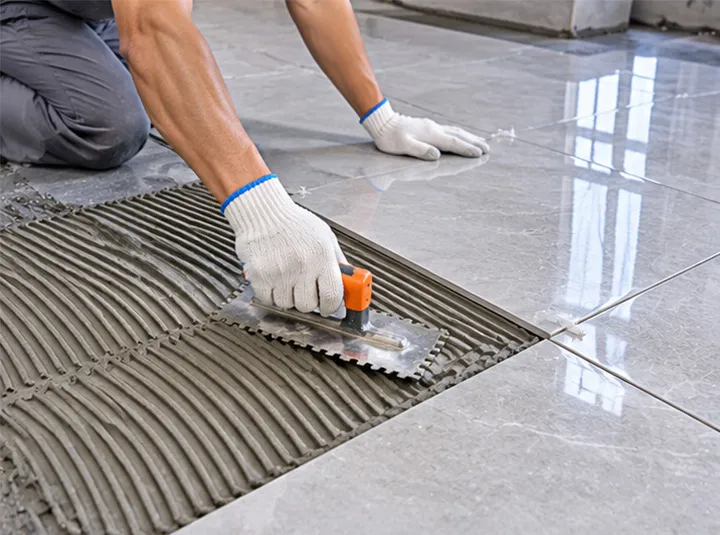
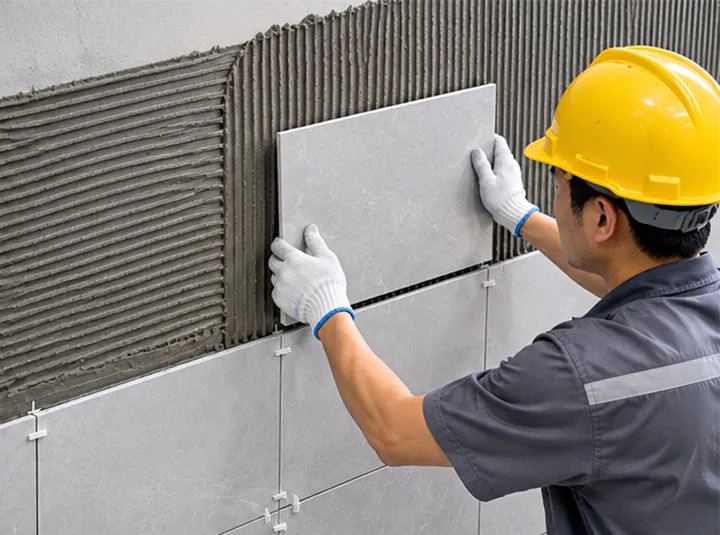
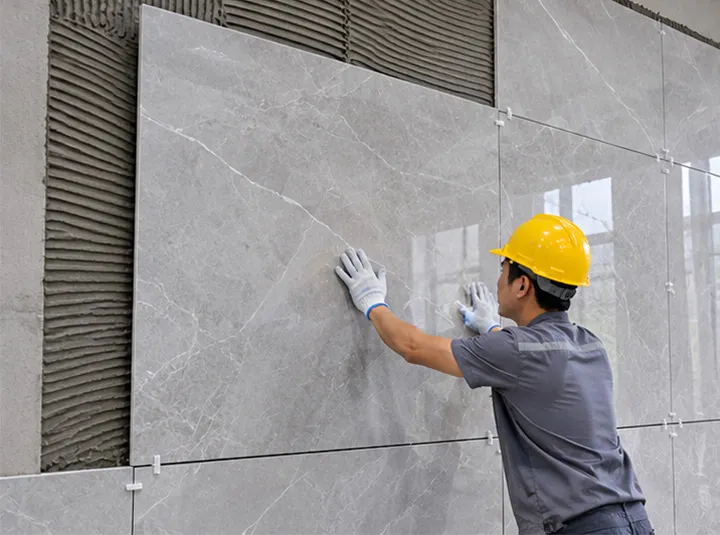
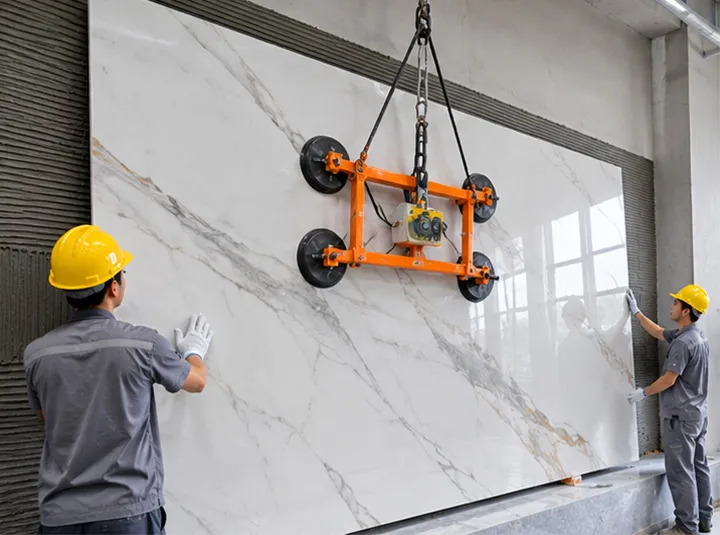
Service
A 200 g sample from stock, so you can run a trial batch before committing to a tonne.
A COA with every batch: viscosity released within −10% / +20% of nominal, with the method behind it.
5–15 days from order confirmation, from 1 metric ton per grade, shipping to 30+ export markets.
Enquiries are answered within 12 working hours. Samples ship from stock; the trial batch stays your decision.
FAQ
0.28–0.35% of the dry mix covers almost every cement-based tile adhesive we are asked about. Our own starting formulations use 2.8 kg per tonne in C0 and C1 and 3.5 kg in C2, and 0.3–0.4% in the percentage-based C1TE and C2TES1 mixes. Below that band water retention falls away and open time shortens; well above it the mix turns sticky, wets the tile back more slowly and costs money for nothing. Confirm the number on your own filler before production.
ALC-H500C, the 50,000 mPa·s tile-adhesive grade, goes into all five formulations on this page, C0 included. C0 needs no different ether, only less polymer: that difference sits in the RDP line, not in the grade. The formulations were written against the codes of another supplier, and we publish no conversion to ours. ALC-H100C at 10,000 mPa·s is a leaner option for C0 where the sand is fine. Batch viscosity is released within −10% / +20% of nominal.
No. More cellulose ether improves water retention, slip and workability, but it does not create the polymer film that gives adhesion after water immersion. C2 is defined by the adhesion result, and in a cement-based system that result comes from redispersible powder — 25 kg per tonne in our C2 formulation, against 15 kg in C1. Over-dosing the ether is a common way to make a mix feel better while the adhesion test stays exactly where it was.
Slip is almost always a water problem before it is an additive problem. Extra water makes the fresh mortar flow under the weight of the tile, and no dosage fixes that. Check the water ratio first, then add starch ether for thixotropy, and only then move the ether level. A deeper notch adds weight rather than grip. Slip resistance is a declared property — the T class to EN 1308 — not something to assume from a good-looking mix.
An extended-open-time adhesive has to hold 30 minutes to EN 1346, which is what the E in C1TE and C2TES1 declares; a standard mix need not reach that in the sun. Open time is set by water retention and accelerator level, so raise the cellulose ether or step up in viscosity before reaching for a retarder. Never add water on site to revive a stiffening mix: it resets the clock and drops adhesion that had already developed.
Yes. We make both the cellulose ether and the redispersible polymer powder, so the water retention and the polymer film come from one supplier and one COA set. That matters when a batch fails an adhesion test: two suppliers will each point at the other, and you are left repeating the trial. Both are sampled free of charge at 200 g, minimum order is 1 metric ton per grade, and orders are confirmed in 5–15 days.
Tell us the substrate, the class you have to reach and the materials you buy locally. The reply includes the TDS, a grade recommendation and a free 200 g sample.